
Accessibility FAQ: Building Digital Products for Neurodivergent Users
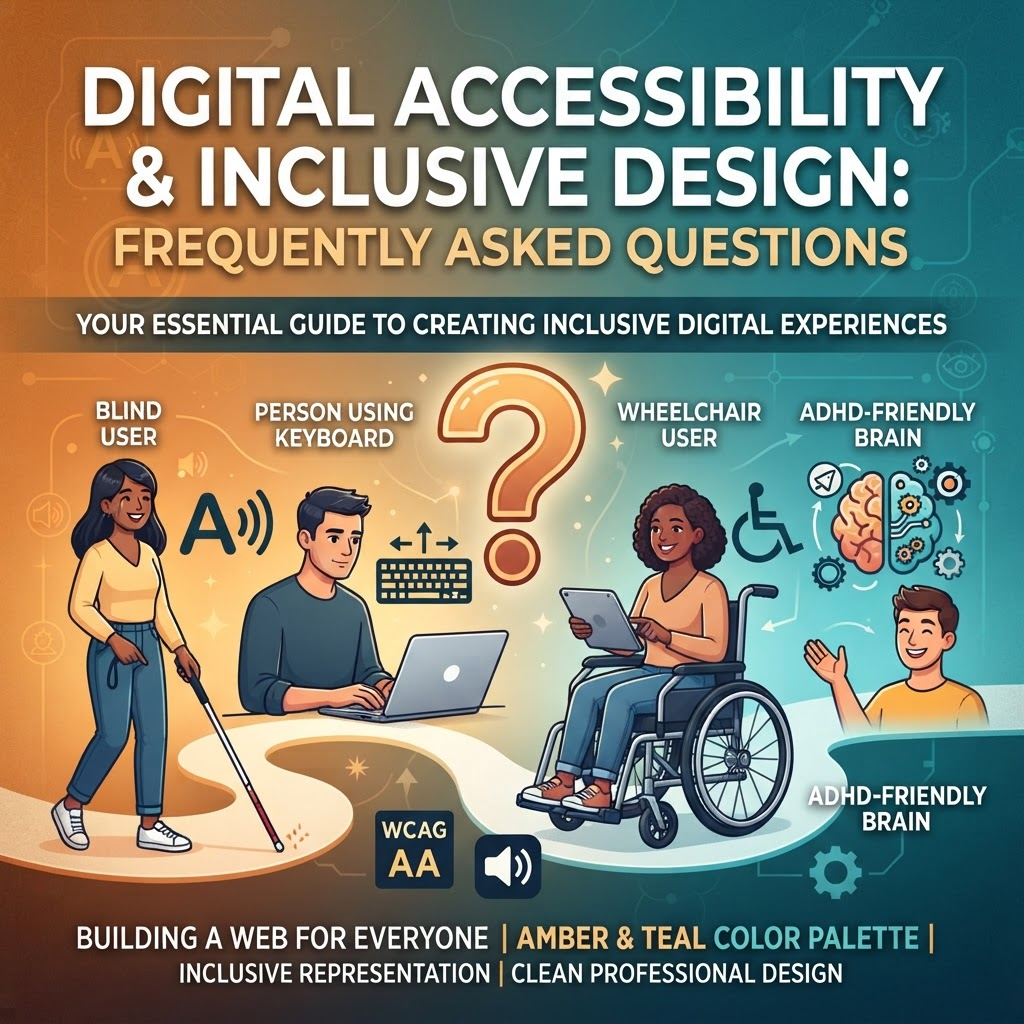
What does 'accessible design' really mean? Why should your healthcare app care about screen readers? And how does keyboard navigation help someone with ADHD? This FAQ answers the most common questions about digital accessibility and why it matters for neurodivergent users.
Frequently Asked Questions
Accessibility (or 'a11y') means designing digital products so that people with disabilities can use them independently. This includes people who are blind, deaf, motor-impaired, cognitively diverse (like ADHD), dyslexic, on the autism spectrum, aging, or using assistive technology.
ADHD often co-occurs with dyspraxia (motor control issues), dyslexia, and executive function challenges. Additionally, ADHD brains are sensitive to cognitive load—confusing interfaces, too many options at once, and unclear error messages make ADHD users feel overwhelmed. Accessible design reduces that cognitive burden through clear structure, predictable navigation, and plain-language communication.
A screen reader is software that reads aloud everything on your screen—text, buttons, form fields, headings. Blind and low-vision users rely on screen readers. If a button has no label or a form field has no description, the screen reader can't tell the user what to do. That's why aria-labels and semantic HTML are critical.
People with motor impairments (including some ADHD presentations with dyspraxia), people with hand tremors, people with repetitive strain injuries, and power users who simply prefer keyboards. If your site only works with a mouse, you're excluding everyone in this group.
Some websites use CSS to prevent users from zooming (userScalable=false). This is illegal in WCAG 2.2. People with low vision, presbyopia (age-related), or just poor eyesight need to zoom to 200% to read comfortably. Blocking zoom is actively hostile to people with disabilities.
aria-labels are HTML attributes that describe what an element is for. Example: a bell icon button has no text, so it gets aria-label='Notifications, 3 unread'. Screen readers then announce 'Notifications, 3 unread' instead of just 'button'.
A touch target is anything you tap on a phone (buttons, links, form fields). Small targets (16px) are easy to miss, especially for people with hand tremors or fine motor challenges. WCAG 2.5.5 requires 44×44px minimums. It's not just accessible—it's better UX for everyone on mobile.
aria-live regions announce changes to screen readers without requiring focus. Example: Your form submission fails. A screen reader user would never know unless you announce the error message. aria-live='polite' says 'Hey, something changed—read this'.
No. Semantic HTML, clear focus indicators, and proper labeling are often simpler than inaccessible hacks. The cost is in planning—thinking about keyboard navigation and screen readers from day one rather than bolting it on at the end.
By reducing cognitive load. Clear headings, predictable navigation, plain-language error messages, and logical tab order all make it easier for ADHD brains to navigate without getting lost or overwhelmed. Accessible design = inclusive design = ADHD-friendly design.
WCAG (Web Content Accessibility Guidelines) is the international standard for web accessibility, maintained by the W3C (World Wide Web Consortium). Level A is basic; Level AA is industry standard; Level AAA is gold-plated. Most companies and regulations aim for AA.
No. Automated tools catch ~30% of accessibility issues. The other 70% require real users testing with actual assistive tech. Always involve disabled users in user testing.
The Bottom Line
Accessibility is inclusion. It's saying 'we designed this for you too.' For ADHD users, that means less frustration, less cognitive overload, and the ability to actually complete the assessment or manage your health without fighting the interface.
If you're building digital products—especially healthcare products—invest in accessibility. Your users with disabilities will thank you. And honestly? Your users without disabilities will too.